news
Darwin's Violent Crime Fight: How the Top End Stacks Up Against Glasgow's Radical Turnaround
As Victoria eyes a Scottish crime-reduction model that reshaped one of Europe's toughest cities, Darwin, with its own stubborn assault statistics, is already running something quietly similar, and the results are uneven.
How we reported this
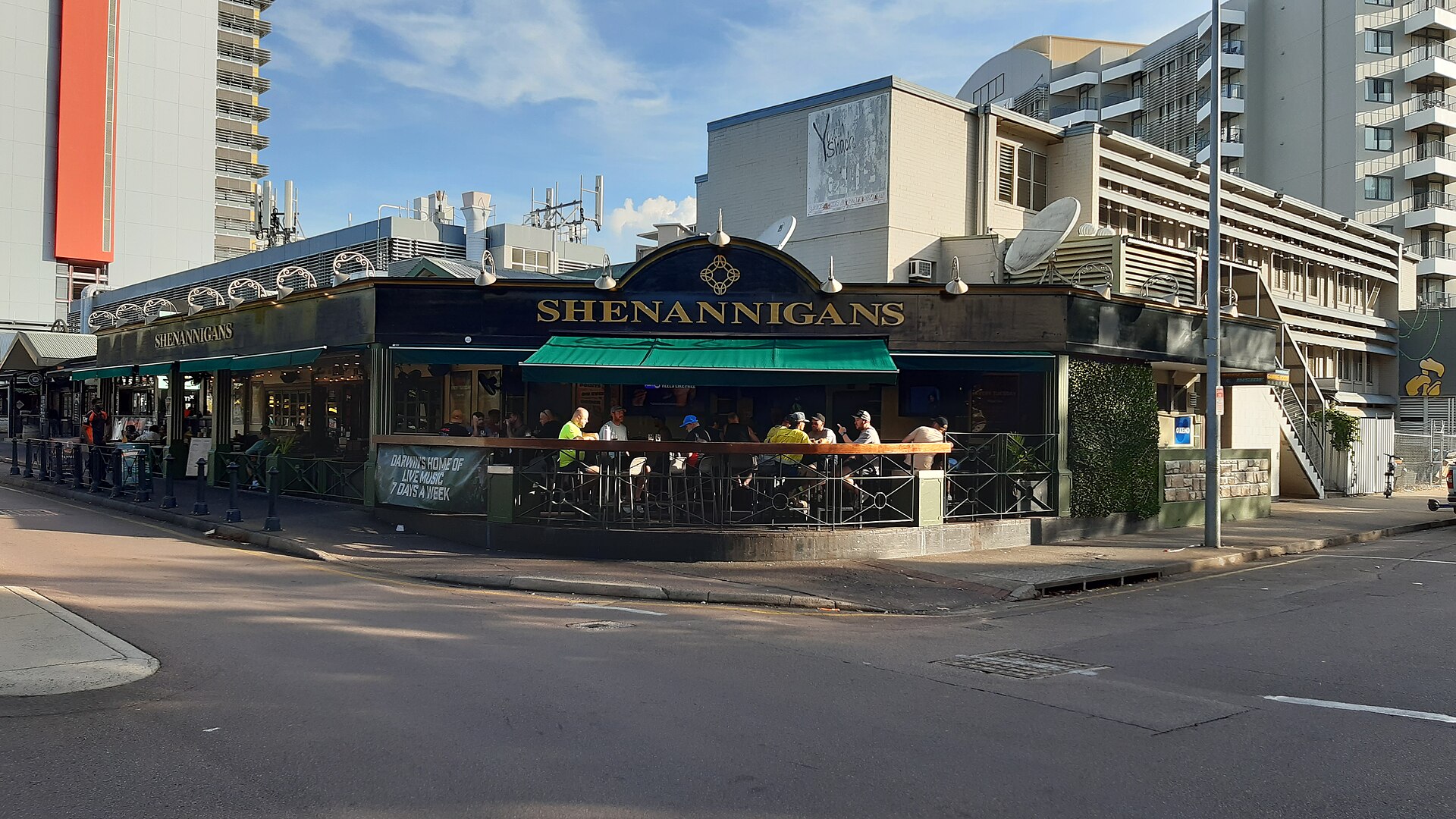
Darwin records more assaults per capita than any other Australian capital. That single fact sits at the centre of every conversation about liveability in the Top End, and it has taken on fresh urgency this week as Glasgow's Violence Reduction Unit, the program that helped cut Scotland's murder rate by more than 60 percent over two decades, attracts serious attention from governments on the eastern seaboard.
The timing matters for Darwin because the NT Government is midway through a suite of community safety investments tied to the 2025-26 budget, which allocated $48.2 million toward crime prevention and remote community policing. Whether that money is flowing into programs that actually resemble what worked in Glasgow, or whether it is being absorbed into enforcement-heavy responses that evidence suggests have limited long-term effect, is the question local social workers and community groups are now pushing harder than ever.
What Glasgow Did, and What Darwin Is Attempting
Glasgow's approach, formalised through the Violence Reduction Unit established in 2005, treated violence as a public health problem rather than purely a law enforcement one. Hospital emergency departments became early-warning systems. Workers met offenders bedside within hours of admission. The city's Easterhouse district, once synonymous with gang violence, saw sustained declines in serious assaults within five years of the program operating at scale.
Darwin has no direct equivalent, but two programs come closest. The Darwin-based Danila Dilba Health Service runs street-level outreach from its Rapid Creek Road clinic and has long argued for a health-led model of responding to alcohol-fuelled violence in the Mitchell Street and Smith Street precincts. Separately, the NT Government's Domestic, Family and Sexual Violence Reduction Framework, released in late 2024, commits to trauma-informed intervention, though critics inside the sector say resourcing has lagged behind the language.
The comparison to Glasgow is instructive because Darwin shares some structural features that made the Scottish model relevant there: a relatively small population (roughly 150,000 in greater Darwin against Glasgow's 630,000), a concentrated geography, and violence patterns heavily linked to alcohol and socioeconomic disadvantage. Darwin's Palmerston suburb and the Bagot community on Gilipu Drive sit alongside high-density public housing and record some of the highest incident callout rates in the NT Police annual report.
The Numbers Are Hard to Argue With
NT Police data for 2024-25 shows Darwin recorded 3,847 assault offences, a figure that represents a modest 4 percent decline from the previous year but remains more than double the rate of comparable mid-sized cities like Townsville or Cairns. Alcohol Mandatory Treatment, a controversial NT intervention program that has drawn criticism from human rights bodies, processed 412 individuals through the Berrimah facility in the same period.
Glasgow, by contrast, had reduced its serious violence rate to the point where, by 2023, it no longer topped European homicide rankings, a position it held for years before the public health model took hold. The difference in trajectory is striking. Darwin's decline is incremental; Glasgow's was structural.
Community organisations including Darwin Community Legal Service, operating from Cavenagh Street in the CBD, have put formal submissions to the NT Government requesting a dedicated place-based violence reduction unit modelled explicitly on Scottish and Welsh examples. The submission, lodged in March 2026, has not yet received a formal government response.
For residents in suburbs like Malak and Karama, where neighbourhood watch groups have reported growing fatigue with reactive policing, the practical question is what changes on the ground before the next wet season, when assault numbers historically spike. The Garma Forum in August will likely provide another platform for First Nations community leaders to press the case for health-led approaches, particularly given that Aboriginal Territorians are disproportionately represented in both offending and victimisation statistics. Anyone wanting to engage with the current consultation process can contact the NT Department of Territory Families, Housing and Communities directly through its Civic Centre offices on Harry Chan Avenue.