property
Cashing Out and Downsizing: Where Darwin's Empty-Nesters Are Landing
From oversized Palmerston family homes to low-maintenance inner-city units, Darwin's downsizer cohort is making a calculated move, and the numbers are starting to show it.
How we reported this
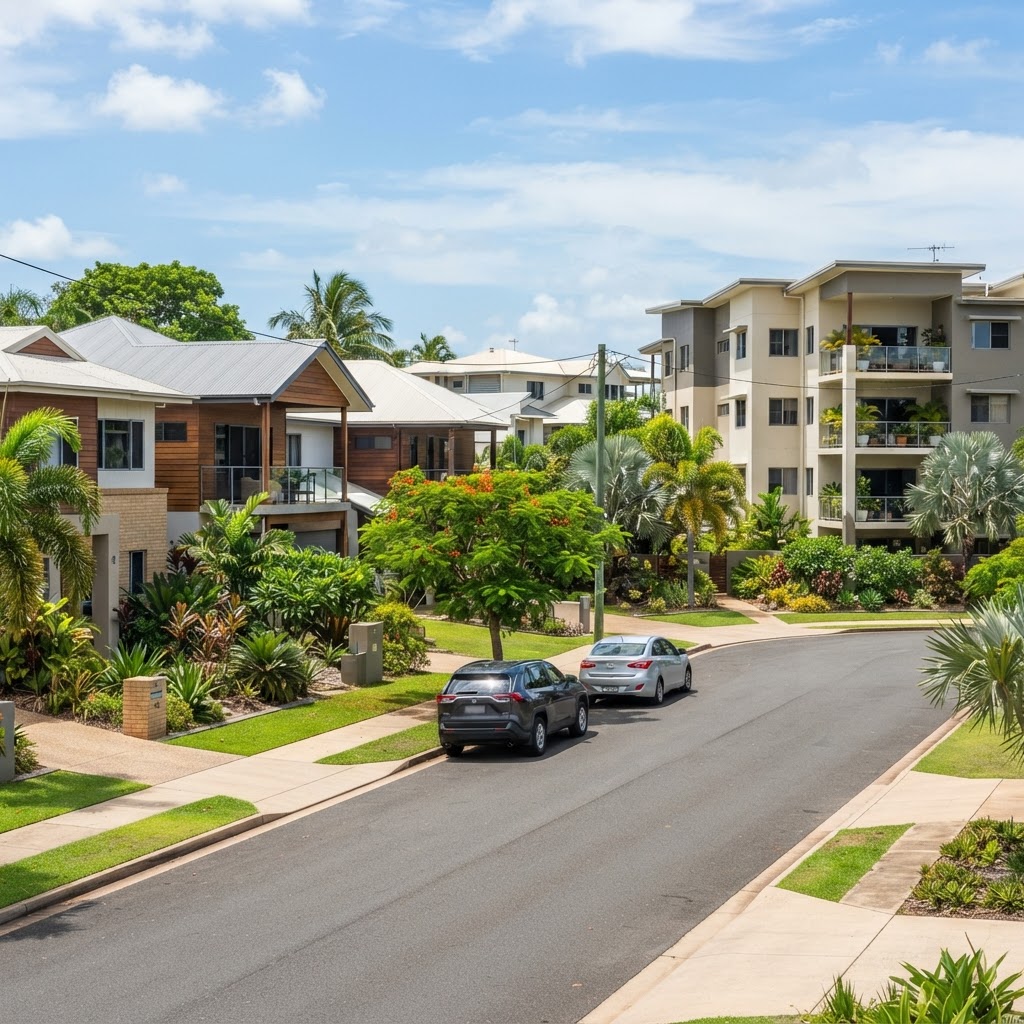
Darwin's downsizer market has a clear direction: out of the sprawling four-bedders in Palmerston's growth corridors and into smaller, well-located properties closer to the CBD, the waterfront, and the lifestyle precincts that make the Top End worth staying in. Property managers and selling agents across the city are reporting a steady uptick in owner-occupiers aged 55 and over selling family homes and re-entering the market as buyers, a trend that is quietly reshaping demand across a handful of key suburbs.
The timing is deliberate. Darwin's median house price sits around $490,000, well below the national capital city average, meaning a family home in Palmerston or Anula that was purchased a decade ago and has since been paid down significantly can fund a clean, mortgage-free next chapter. Defence salary increases flowing through NT-based households, combined with the broader federal government infrastructure spend in the region, have given a cohort of public sector and defence workers the balance sheet to act. The kids have left. The four-car driveway feels absurd. The decision becomes straightforward.
The Suburbs Pulling Downsizers In
Larrakeyah is the standout. The suburb sits between the Darwin CBD and Fannie Bay, close to the Darwin Waterfront Precinct, Stokes Hill Wharf, and Doctors Gully, the kind of walking-distance lifestyle that a retiree or pre-retiree leaving a house in Rosebery or Durack finds genuinely compelling. Two-bedroom apartments and townhouses in Larrakeyah have been moving at prices broadly in the $450,000 to $580,000 range this year, with some well-presented units clearing above asking. For a downsizer selling a Palmerston home in the high $400,000s or low $500,000s, the maths can work with minimal or no mortgage.
Parap is doing similar work, drawing buyers who want a neighbourhood feel with access to the famous Parap Village Markets, a walkable retail strip, and proximity to Royal Darwin Hospital, a practical consideration for an older demographic. Unit stock in Parap is tight, which keeps prices firmer than the oversupplied apartment end of Darwin's CBD fringe. Fannie Bay, with its established greenery along East Point Road and access to the East Point Reserve, continues to attract downsizers who want a house, just a smaller, more manageable one than what they left behind.
Nightcliff also deserves mention. The suburb's foreshore, the Nightcliff Jetty precinct, and the weekend market culture at Nightcliff Shopping Centre give it a community texture that resonates strongly with long-term Darwin residents. Properties here don't stay listed long when they're priced honestly.
Yields, Supply, and What Downsizers Are Competing Against
The wrinkle in this story is investor competition. Darwin consistently records rental yields of 6 to 7 percent, the highest of any Australian capital or major regional market, which means every two-bedroom unit in Larrakeyah or Parap that a downsizer wants to owner-occupy is also exactly the asset an interstate investor with a self-managed super fund is hunting. That competition is real, and it has kept prices from softening even as Melbourne's auction market recorded what analysts described as its worst start to winter on record in mid-2026. Darwin is a different animal.
The federal government's downsizer superannuation contribution scheme, which allows Australians aged 55 and over to contribute up to $300,000 per person from the sale of a principal residence into their superannuation, remains a significant lever in these decisions. Financial planners with practices on Smith Street and in the Casuarina Square precinct have reported fielding more inquiries about that mechanism as more Territorians hit the eligible age bracket with equity to deploy.
For anyone considering this move, the practical advice is to get a selling appraisal on the family home before assuming the gap will be comfortable. Palmerston stock has held reasonably well, but condition and location within the suburb matter enormously, a tired house on a large block in Durack requires a different calculation than a maintained home on a quieter Rosebery street. Engage a buyer's agent familiar with inner Darwin if bidding against investors who move fast. And move before the dry season auction listings thin out further, July and August historically represent the sharpest window of stock availability in this market before the build-up slows everything down.
This article is general information only and is not personal financial or investment advice. Consider your own circumstances and seek licensed professional advice before making financial decisions.