property
The Darwin Suburbs Where Buying Has Become Cheaper Than Renting
With the NT median sitting around $490,000 and rental yields among the highest in the country, the maths on renting versus buying has quietly flipped in several Darwin-area pockets.
How we reported this
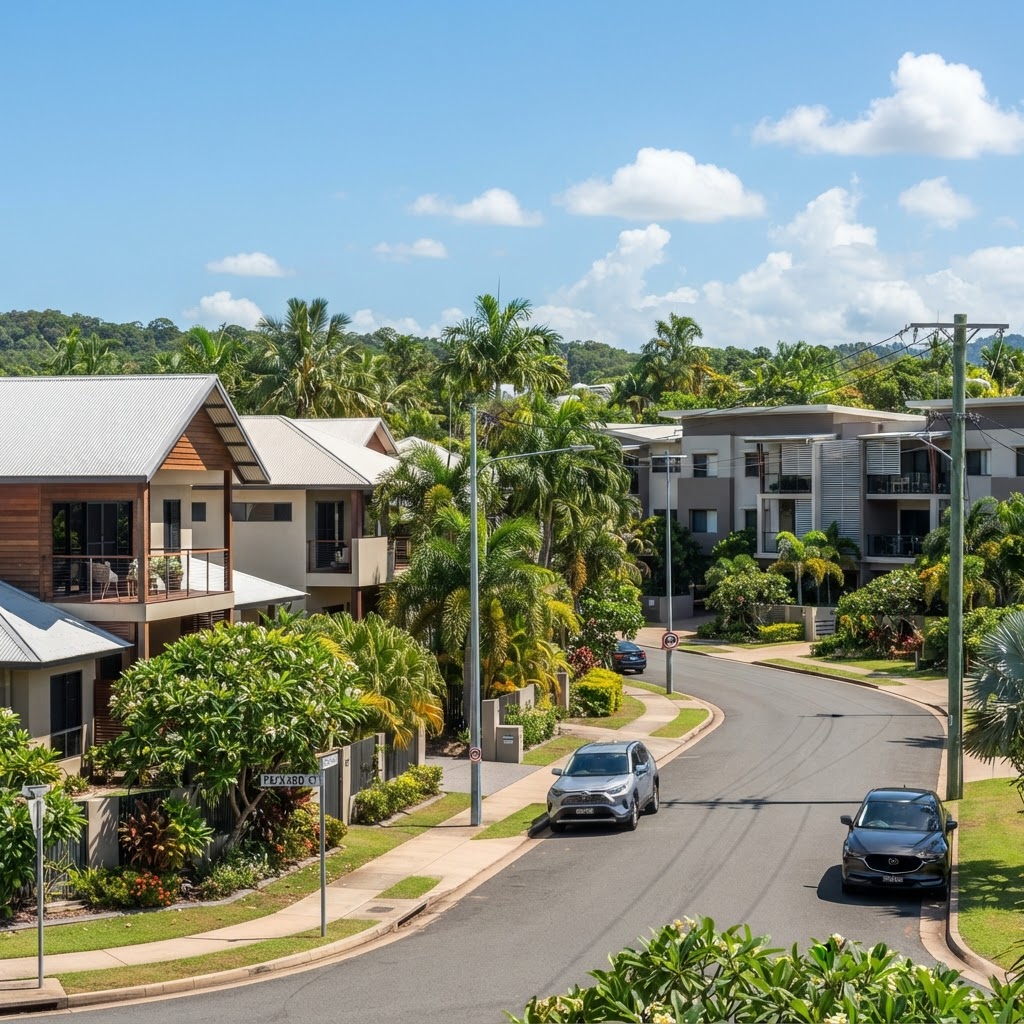
The numbers have shifted. In parts of Palmerston and Darwin's middle ring, a buyer with a standard 20 percent deposit is now looking at monthly mortgage repayments that sit below what landlords are charging for the same type of dwelling, a reversal that would have seemed implausible to most Territorians just three years ago.
Darwin's rental market has been squeezed hard. The Territory's rental yields have tracked between 6 and 7 percent, the highest of any capital or near-capital market in the country, and that pressure lands squarely on tenants. Three-bedroom houses in suburbs like Rosebery and Zuccoli have been asking $650 to $700 per week in recent months, pushing annual rent costs toward $35,000. A buyer purchasing a comparable Rosebery home at the NT median of roughly $490,000, with a 20 percent deposit and a principal-and-interest loan at current variable rates near 6.3 percent, faces monthly repayments in the ballpark of $2,450, or about $565 per week. The arithmetic is no longer comfortable for renters.
Why the Equation Has Changed in Palmerston
Palmerston is where the case is clearest. The suburb corridor anchored by Zuccoli and the newer stages of Johnston, where land releases through the Northern Territory Government's HomeBuild NT program have kept entry-level stock moving, has produced a wave of completed homes priced between $480,000 and $540,000. These are four-bedroom, two-bathroom houses on lots around 450 to 500 square metres, the bread-and-butter of the defence and public service workforce that underpins Darwin's demand base. RAAF Base Darwin and Robertson Barracks in Palmerston feed a constant stream of buyers and renters into this corridor, but the recent uplift in defence spending, tied to expanded facilities programs announced under the AUKUS arrangements, has tightened rental supply faster than purchase supply.
Suburb-level data from the Real Estate Institute of the Northern Territory has previously pointed to Palmerston vacancy rates running well below 2 percent. At that level, landlords hold the leverage, and rents move accordingly. But that same tightness, perversely, is now making ownership look rational for anyone who can clear the deposit hurdle.
Darwin's inner suburbs tell a different story but arrive at a similar conclusion. In Coconut Grove, where older three-bedroom homes on larger blocks have been changing hands around the $520,000 to $560,000 mark, weekly asking rents for comparable properties have climbed to $700 or more. Buyers at $540,000 with a 20 percent deposit are again looking at weekly mortgage costs well beneath what the rental market is charging. Stuart Park, closer to the Darwin CBD waterfront strip along Gilruth Avenue, has seen unit rents push past $550 per week for two-bedrooms, levels where even apartment ownership, typically a harder case to make, is starting to compete.
The Deposit Gap Remains the Real Barrier
None of this means renting is simply a bad choice. The catch, and it is a significant one, is the deposit. Twenty percent of a $490,000 purchase is $98,000, a sum that takes most households years to accumulate while paying Darwin's elevated rents. The NT Government's HomeGrown Territory scheme offers concessions and support for first-home buyers, and the federal Home Guarantee Scheme allows eligible buyers to enter with a 5 percent deposit, but those low-deposit loans carry lenders mortgage insurance costs or require a guarantor arrangement that changes the repayment calculus.
For those who can cross the deposit threshold, the advice coming from mortgage brokers working the Darwin market is consistent: run the numbers suburb by suburb, not city-wide. Muirhead near Casuarina Coastal Reserve and the established parts of Driver in Palmerston are both areas where purchase costs are increasingly competitive against lease costs, particularly for buyers who intend to stay put for five or more years.
The broader lesson from this window in the market is simple: Darwin has historically been dismissed as a place where renting makes more sense because prices move in volatile cycles. Right now, in mid-2026, the rental market has made that logic harder to sustain in at least half a dozen suburbs. Buyers who have been sitting on savings and waiting for a cleaner signal may not get a louder one than this.
This article is general information only and is not personal financial or investment advice. Consider your own circumstances and seek licensed professional advice before making financial decisions.