property
Why Darwin Renters Are Buying in Palmerston Instead of Their Own Backyard
With rental yields running at 6-7% and entry-level houses still under $500,000, the rent-vesting play is finding serious traction among Territory workers who want a foothold in the market without leaving their Fannie Bay apartment.
How we reported this
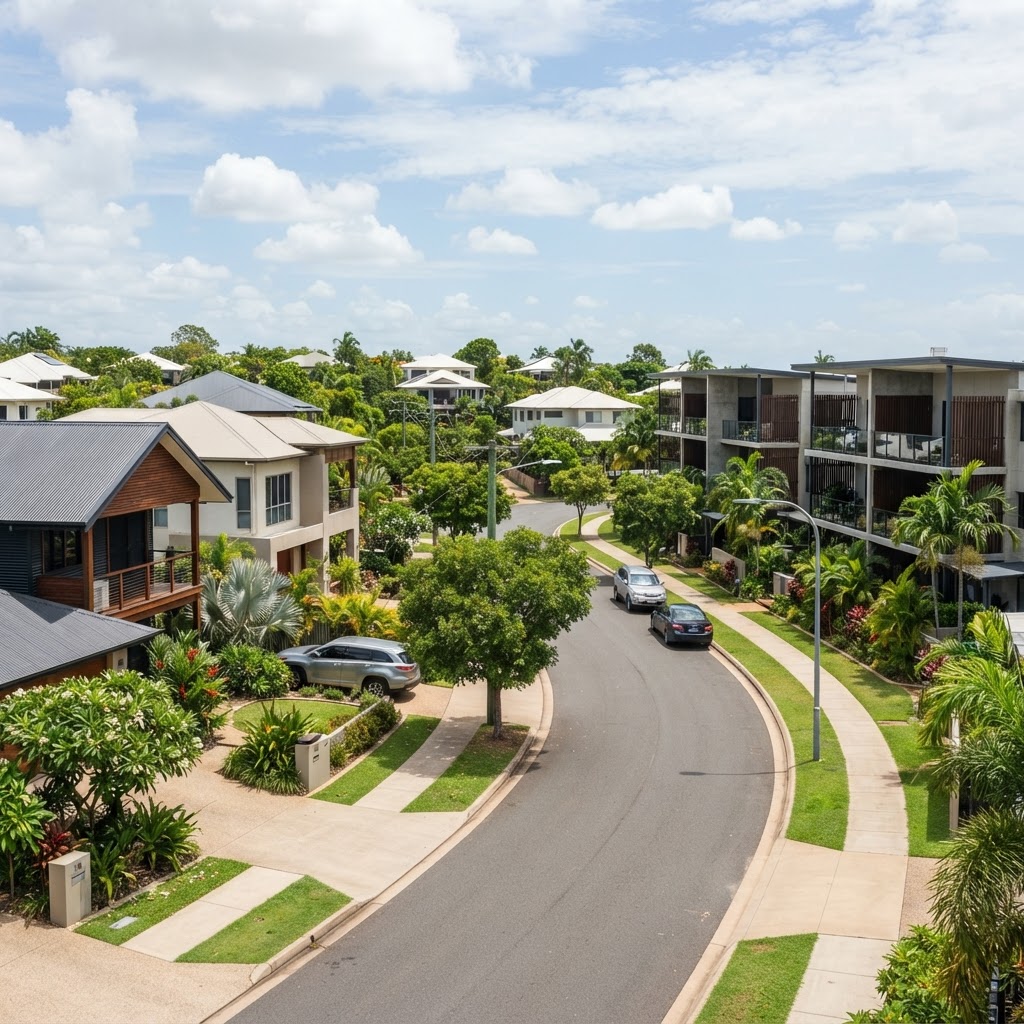
Darwin's median house price sits at roughly $490,000, less than half of Sydney's, yet a growing number of local workers are choosing to rent where they live and buy somewhere cheaper as an investment. The strategy has a name now: rent-vesting. And in the Top End, the numbers make it harder to dismiss than almost anywhere else in the country.
The timing matters. Melbourne's auction market just recorded its worst start to a winter in living memory, and southern investors are casting around for yield. Meanwhile, Gen Z buyers nationally are still telling survey after survey they want to own property, they just can't stomach the prices in the cities where they work. Darwin offers a third path: buy a $420,000 house in Palmerston's Zuccoli or Bellamack, rent it out for $550 a week, and keep renting a unit near the Darwin CBD yourself, where the lifestyle suits your job and your commute.
The Local Maths on Rent-Vesting
Darwin consistently records the highest gross rental yields in Australia, regularly coming in between 6 and 7 percent. A three-bedroom house purchased at $430,000 in Palmerston's northern growth corridor, streets like Senna Circuit or the estates feeding off Roystonea Avenue, can realistically return $28,000 a year in gross rent at current asking prices. That doesn't erase the mortgage, but it covers a substantial share of it while the investor rents a two-bedder in the Darwin suburb of Stuart Park or Parap for $500 to $600 a week.
The Defence housing uplift is doing real work here. The federal government's sustained investment in RAAF Base Darwin and Robertson Barracks in Palmerston has pushed demand for rental stock in the middle ring suburbs. Defence Housing Australia manages hundreds of properties across the Territory, and private landlords feeding that tenant pool have seen vacancy rates stay tight even as national sentiment wobbles. The result: investors who bought in Bellamack three years ago are not panicking.
Territory Home Owner grants and the First Home Owner Grant, currently administered through the Northern Territory's Department of Treasury and Finance, can still be accessed on new builds in Palmerston, reducing upfront costs for first-time rent-vestors who structure their purchase correctly. A new build also carries depreciation benefits that a 1970s Rapid Creek house simply cannot match, which changes the after-tax return considerably.
Where the Strategy Breaks Down
Rent-vesting is not a free lunch. Darwin's market has a track record of sharp corrections, values fell heavily between 2014 and 2019 before beginning a sustained recovery. Anyone buying in Zuccoli or Howard Springs today is taking a bet that the current defence and infrastructure cycle holds. If major project activity slows, vacancy rates can move fast, and a property yielding 7 percent this year can yield considerably less when it sits empty for six weeks.
The other trap is lifestyle drift. Renting in Darwin's inner suburbs, say, a unit walking distance to Smith Street Mall or the Parap markets, is comfortable, but rent paid is not equity built. Rent-vestors need discipline: the investment property has to be managed as a business, not neglected while the lifestyle property absorbs attention. Using a licensed property manager, rather than self-managing from across the city, is not optional for most people holding a full-time government or mining roster job.
The practical starting point for anyone considering this approach is a conversation with a mortgage broker who understands NT market cycles, followed by a realistic cashflow spreadsheet that includes council rates, body corporate fees if applicable, property management fees, typically 8 to 10 percent of rent in Darwin, and a vacancy buffer of at least four weeks per year. Get those numbers to work on paper before signing anything. The yield is real. So is the risk.
This article is general information only and is not personal financial or investment advice. Consider your own circumstances and seek licensed professional advice before making financial decisions.