Darwin vs. the World: How Australia's Defence Capital Stacks Up Against Cities Built on Military Muscle
From Guam to Bremerhaven, garrison cities have a playbook — Darwin is writing its own, with mixed results.
From Guam to Bremerhaven, garrison cities have a playbook — Darwin is writing its own, with mixed results.
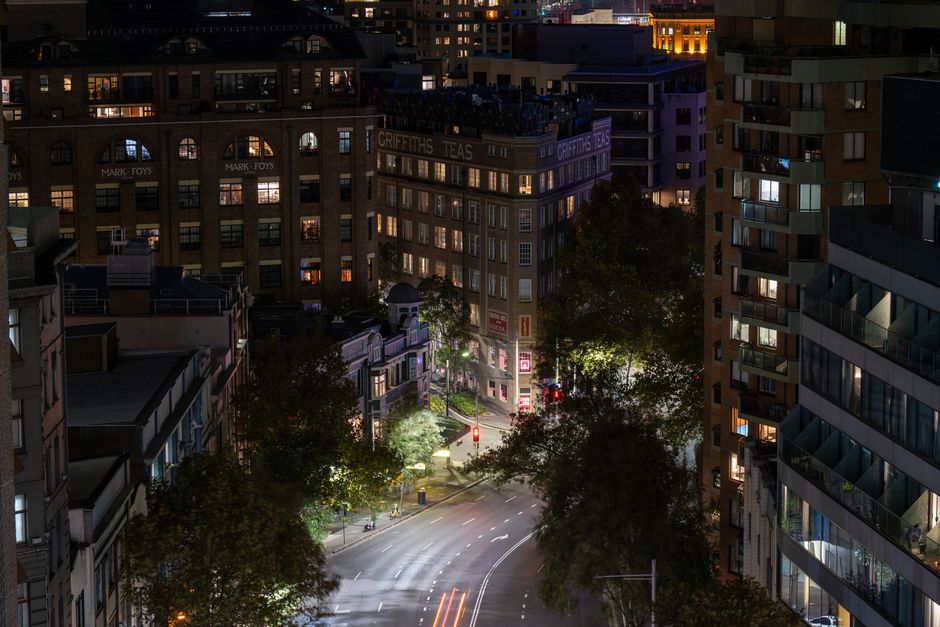
The numbers are hard to ignore. Roughly 2,500 US Marines are currently rotating through HMAS Coonawarra and Robertson Barracks under the Marine Rotational Force – Darwin program, a figure that Defence officials expect to climb past 4,000 by 2028 under the AUKUS framework. Add the NT Labor government's $1.9 billion remote housing commitment, a gas sector still jostling for regulatory footing in the Timor Sea, and a city of barely 150,000 people absorbing one of the fastest defence build-ups in Australian peacetime history. Darwin is not just a strategic asset. It is a social experiment.
The timing matters because garrison cities globally are at an inflection point. Okinawa has spent three decades fighting base expansions through the courts. Bremerhaven, Germany's port city reshaped by NATO logistics, saw housing costs spike 34 percent in the five years following Bundeswehr expansion. Guam, perhaps the closest analogue to Darwin in geography and strategic function, is now grappling with a $US8.7 billion US military build-up that has pushed median rents in Hagåtña past what most local government workers can afford. Darwin's leadership has watched all of this. Whether the lessons have actually landed is another question.
Drive out along the Stuart Highway toward Palmerston and the construction activity around Robertson Barracks is unmistakable — new accommodation blocks, upgraded perimeter infrastructure, expanded logistics facilities. Back in the CBD, the Darwin Waterfront Precinct has quietly become a preferred landing zone for defence contractors, with half a dozen firms connected to the AUKUS submarine program having registered Northern Territory business addresses in Mitchell Street since late 2024. Office vacancy rates in Darwin's CBD, which sat at a punishing 22 percent in 2022, have dropped to around 14 percent — still high by east-coast standards, but the directional shift is real.
Charles Darwin University's newly expanded engineering and cybersecurity faculty at the Casuarina campus is a direct response to workforce demand signals from Defence. Fifty-eight students enrolled in the inaugural Applied Defence Technologies stream in February 2026. The NT government's Territory Economic Reconstruction Commission has flagged defence as the single largest driver of projected employment growth through 2030, ahead of both tourism and gas extraction.
Compare that with Townsville, the other Australian city that considers itself a defence hub. Townsville's population is around 230,000 and it hosts the Army's 3rd Brigade at Lavarack Barracks, but the economic diversification story there has stalled repeatedly. Defence spending flows through the base without generating the downstream private sector activity the city has chased for years. Darwin, by contrast, is seeing defence dollars catalyse supply chain investment in East Arm Port and attract maritime maintenance firms that have no direct ADF contract but are positioning for work that doesn't yet exist.
The risk is housing. In Guam, military build-up absorbed rental stock faster than private developers could respond, and the burden fell disproportionately on Indigenous Chamorro families, who were already navigating land rights disputes that echo, uncomfortably, the Aboriginal land rights tensions visible at every Garma Forum. Darwin has its own version of this pressure. Median house prices in Millner and Nakara — suburbs within reasonable commuting distance of both Robertson Barracks and the CBD — rose 11 percent in the twelve months to April 2026, according to CoreLogic data. Defence housing allowances effectively create a rent floor that private renters cannot compete against.
The NT government has acknowledged the problem but has not yet produced a housing supply mechanism specifically calibrated to defence-driven demand. The existing remote community housing investment, while substantial, is pointed at a different problem in a different geography. What Darwin needs, and what cities like Bremerhaven eventually built after their mistakes, is a zoning and incentives framework that adds private rental stock specifically in the inner and middle suburbs where defence personnel actually want to live.
The AUKUS submarine pathway's initial capability milestones are due to be reviewed by the federal government in late 2027. Darwin's window to get ahead of the housing curve, to train the workforce, and to avoid becoming a cautionary tale like Guam rather than a success story, is roughly eighteen months. The strategic geography is not going anywhere. The policy response still has time to catch up.
Your reaction
Spread the word
About this article
Published by The Daily Darwin
Daily brief
Free, in your inbox before 7am. Weekdays.
The Daily Network — local news across Australia