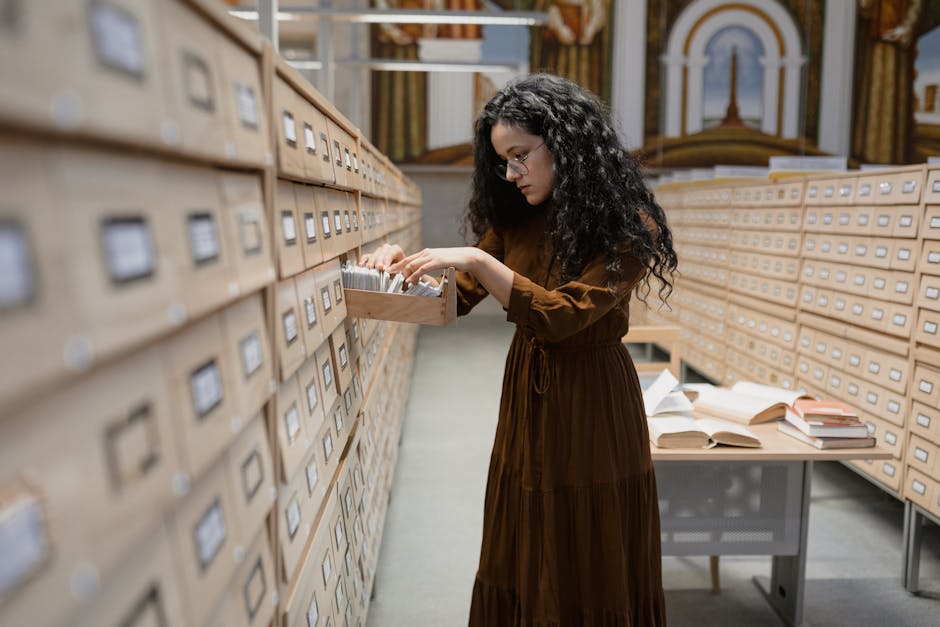
Northern Territory government agencies are sitting on thousands of duplicate digital images embedded across public records systems, and the bill for storage, retrieval errors and administrative rework is climbing. The issue has drawn pointed commentary from archivists, Indigenous land councils and information technology specialists operating across Darwin's government precinct — and pressure is building to act before the problem compounds further.
The timing matters. The NT's remote housing investment program, currently channelling capital into communities across Arnhem Land and the Tiwi Islands, depends on accurate site photography and cadastral imagery to validate project milestones and trigger funding drawdowns. When duplicate images populate those records, payment verification slows, disputes arise over what was built and where, and the documentation trail that Aboriginal land councils rely on for royalty and land-use negotiations gets murkier.
What's Driving the Problem
The duplication issue is not new, but it has intensified as Darwin-based agencies expanded their use of drone surveys and satellite imaging from around 2022 onward. The Department of Infrastructure, Planning and Logistics, which operates out of the Goyder Centre on Shepherd Street, maintains image libraries tied to construction contracts across more than 70 remote sites. Multiple uploads triggered by contractors using different file-naming conventions have, according to publicly available audit guidance from the NT Government's records management framework, created redundancy rates that can exceed 30 percent in some project folders.
The Northern Land Council, headquartered on Mitchell Street, handles imagery associated with sacred site assessments, exploration permits and pastoral lease renewals across roughly 85 million hectares of land. Staff working on those files have raised concerns at professional forums about the administrative overhead created when the same aerial photograph appears under different metadata tags — making it impossible to determine which version represents the authoritative record without manual cross-checking.
Technology specialists based at Charles Darwin University's Information Technology faculty have flagged that automated deduplication tools available commercially since at least 2023 remain underdeployed across NT government systems. Licensing costs for enterprise-grade solutions typically run between $15,000 and $60,000 annually depending on storage volume — modest against the cost of the administrative errors the duplication produces.
What Key Figures Are Recommending
The conversation has crystallised around three broad positions. Archivists associated with the NT Library and Archives Service, based on the corner of McMinn Street and Parliament House Drive, are pushing for a whole-of-government image registry — a single source of truth where every image acquired with public funds is catalogued once, with all subsequent references pointing back to that master record rather than creating new file instances.
Land rights advocates, particularly those working on documentation for communities in East Arnhem and the Darwin rural area, are pressing for a faster fix. Their argument is pragmatic: the Garma Forum, held annually at Gulkula in northeast Arnhem Land, has repeatedly surfaced concerns about data sovereignty, and duplicate records complicate the already fraught question of who controls imagery of country. Getting the records clean is a precondition for meaningful data governance.
IT specialists lean toward a hybrid approach — automated deduplication run quarterly, combined with human review for any images flagged as relating to sacred sites, native title claims or active legal matters. CDU's Digital Futures Research Group has noted in published work that AI-assisted image matching tools can achieve accuracy rates above 95 percent on standard construction and infrastructure photography, though culturally sensitive material warrants a different threshold entirely.
A formal review of NT government digital asset management practices is expected to report to the Department of Corporate and Digital Development before the end of the 2026 financial year — meaning decisions about how to handle existing duplicates, and what rules apply to new image capture, should be on the table within months. Agencies, land councils and contractors with ongoing documentation obligations would be well served by auditing their own image libraries now, before any new framework locks in compliance requirements they may not yet meet.