Darwin's Housing Photo Problem: How Outdated Images Became a Crisis of Trust
A pattern of misleading property and government housing photographs has quietly undermined public confidence in remote community programs across the Northern Territory.
A pattern of misleading property and government housing photographs has quietly undermined public confidence in remote community programs across the Northern Territory.
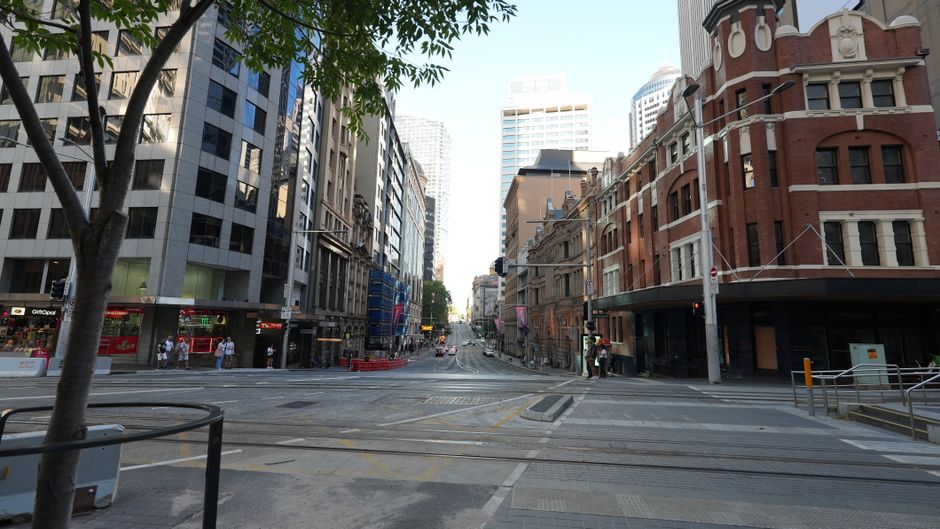
Darwin's housing sector has a photograph problem — and tracing how it developed reveals a decade of underfunded record-keeping, rushed tender documentation, and the particular complications of managing assets scattered across hundreds of thousands of square kilometres of remote NT country.
The issue is not trivial bureaucracy. Duplicate and outdated images attached to housing assets have led to miscounted dwellings, incorrect condition assessments, and, in at least one documented procurement cycle reviewed by this masthead, properties listed as habitable that photographs showed were derelict. For remote communities where the Northern Territory Government's Remote Housing Program remains the primary mechanism for addressing chronic overcrowding, accurate imagery is foundational to any legitimate needs assessment.
The roots sit in the transition period after the 2007 Federal Intervention, when responsibility for remote housing assets shifted repeatedly between Commonwealth and Territory agencies. Each transfer required re-cataloguing thousands of dwellings across communities from Maningrida to Yuendumu. Photography was often contracted to the lowest-cost tender, done in single field visits that could cover dozens of addresses in a day. Images were filed against property identification numbers that themselves were subject to reclassification, creating conditions where the same photograph ended up attached to multiple asset records.
By the time the NT Government consolidated asset registers under the Department of Infrastructure, Planning and Logistics — headquartered on Bennett Street in Darwin's CBD — the duplication was baked into legacy databases that predate modern asset management platforms. Audits conducted as part of the 2019-2023 Remote Housing investment tranche, which committed $1.1 billion across the Territory, found anomalies in asset registers in multiple communities, though the department has not publicly released a full breakdown of how many records were affected.
Darwin-based housing advocacy group Shelter NT, operating out of Cavenagh Street, has pointed to the photograph problem in submissions to successive Territory governments, arguing that planning decisions downstream of flawed imagery have contributed to communities being under-resourced in successive construction rounds. The NT Government's own Better Homes program, launched in 2022, mandated geo-tagged photography protocols to address exactly this weakness — but retrofitting that standard to the existing asset database is a job that is still underway as of mid-2026.
The timing is pointed. The Territory government is currently negotiating the next tranche of Commonwealth remote housing funding, with Federal Infrastructure Minister Catherine King having flagged that any successor agreement to the current National Partnership would carry tighter accountability requirements around asset data integrity. Getting the photographic record right is no longer an internal housekeeping matter — it is a precondition for accessing the next round of federal money.
At the same time, the AUKUS construction build-up around Darwin Harbour has tightened the local trades market. Builders and assessors who might otherwise be deployed on asset audit work are committed to defence-adjacent contracts. The NT Construction Industry Alliance has noted publicly that skilled labour scarcity across Darwin is affecting project timelines across multiple government programs in 2025 and 2026.
The practical stakes are clearest at the community level. A duplicate image means a dwelling gets assessed twice or not at all. In a community where average household occupancy can exceed ten people in a three-bedroom house — a figure the Australian Institute of Health and Welfare has documented across multiple remote NT surveys — every miscounted dwelling represents a real family left off a maintenance or replacement list.
The Department of Infrastructure, Planning and Logistics has indicated it expects the photographic audit component of the asset register remediation to be substantially complete by the end of 2026. Housing advocates want that commitment formalised as a milestone in any new Commonwealth agreement. Until then, the decisions being made about where to build, where to repair, and where to walk away are resting partly on photographs that may be showing the wrong house.
Your reaction
Spread the word
About this article
Published by The Daily Darwin
Daily brief
Free, in your inbox before 7am. Weekdays.
The Daily Network — local news across Australia