Fannie Bay Still Delivers the Goods for Investors Who Do Their Homework
Darwin's most coveted suburb is trading well below its southern blue-chip equivalents — and the fundamentals suggest that gap won't hold forever.
Darwin's most coveted suburb is trading well below its southern blue-chip equivalents — and the fundamentals suggest that gap won't hold forever.
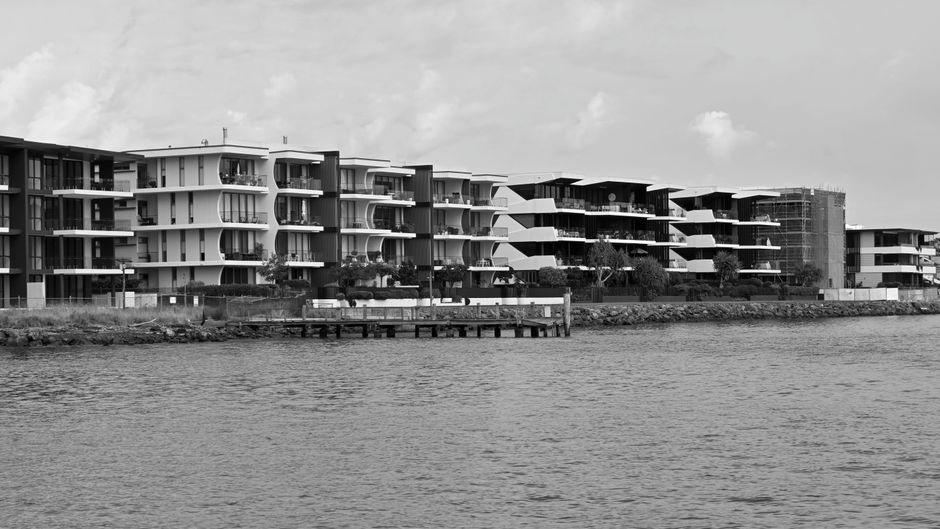
Fannie Bay median house prices have climbed to around $850,000, but buyers comparing that figure to equivalent harbourside suburbs in Sydney or Brisbane are doing a double-take. For a postcode that offers beach access at Vesteys Beach, proximity to the Darwin CBD, and a tenant pool anchored by Defence Housing Australia and federal public servants, the numbers still look remarkably attainable — particularly for investors chasing yield in a market where 6 to 7 per cent gross returns remain the norm across the Top End.
The timing matters. Stamp duty blowouts are hammering buyers in Queensland and Victoria, with some Geelong and southeast Queensland purchasers absorbing duty bills that have ballooned by tens of thousands of dollars over two decades. The Northern Territory's transfer duty concessions, by contrast, have kept entry costs comparatively manageable, and the Territory Home Owner Grant continues to support owner-occupier activity at the lower end. That policy environment is drawing a closer look from interstate investors who have been priced into complexity elsewhere.
The suburb sits four kilometres from the CBD along the Esplanade corridor, bordered by Myilly Point to the west and the Royal Darwin Golf Club to the southeast on Links Road. That golf course frontage alone has underpinned premium land values for decades. East Point Reserve, Darwin's most-visited recreational precinct, is a ten-minute walk from most streets north of Peel Place. These are not replicable amenity anchors — there is only one East Point, and the suburb that wraps around it is not getting any larger.
Palmerston, roughly 20 kilometres to the south, is the Territory's growth engine for new supply and infrastructure spending, with the Palmerston Regional Hospital and ongoing residential development around the Zuccoli and Johnston corridors absorbing much of the first-home buyer market. That expansion is healthy for Darwin broadly, but it also reinforces Fannie Bay's scarcity value. New houses are not being built there. The suburb's housing stock is dominated by older character homes on 700-square-metre-plus blocks, many of which carry development upside under the NT Planning Scheme's residential zones.
Darwin's rental vacancy rate sat at approximately 1.2 per cent as of May 2026, according to figures tracked by the Real Estate Institute of the Northern Territory. Fannie Bay consistently records vacancy rates below the Darwin average, driven by its appeal to mid-to-senior Defence and government personnel who want proximity to Robertson Barracks postings and the Department of Defence precinct near Larrakeyah. A three-bedroom house renting for $700 per week on a property purchased at $800,000 produces a gross yield of around 4.5 per cent — lower than outer Darwin suburbs, but buttressed by tenant stability and capital growth history that the outer ring cannot match.
The broader NT median sits near $490,000, which means Fannie Bay carries a premium. But that premium has compressed over the past 18 months rather than expanded, creating a rare window. Properties on streets like Knuckey Road and Tiwi Drive that were fetching $950,000 in mid-2022 have repriced into the $820,000 to $870,000 range, according to recent sales data held by local agencies including Elders Real Estate Darwin and Ray White Darwin City.
The practical advice for buyers looking seriously at Fannie Bay is straightforward: get building and pest inspections that account for the tropical climate specifically, not standard southern-state templates. The combination of cyclone compliance requirements under AS 4055 and the humidity-driven termite exposure in Darwin means a superficially attractive older home can carry remediation costs that reshape the investment case entirely. Budget for air-conditioning replacement as a standard line item — typically $8,000 to $12,000 for a full system — and factor strata-free land ownership into the total return calculation, since Fannie Bay's character housing stock is predominantly freehold. Buyers who get those fundamentals right will find this is still, for now, a blue-chip address at a non-blue-chip price.
Your reaction
Spread the word
About this article
Published by The Daily Darwin
Daily brief
Free, in your inbox before 7am. Weekdays.
The Daily Network — local news across Australia