Fannie Bay's Waterfront Edge Is Pushing Prices North — Fast
Darwin's most coveted harbour-side suburb is recording price momentum that's catching interstate investors off guard, as defence dollars and tight stock reshape the market.
Darwin's most coveted harbour-side suburb is recording price momentum that's catching interstate investors off guard, as defence dollars and tight stock reshape the market.
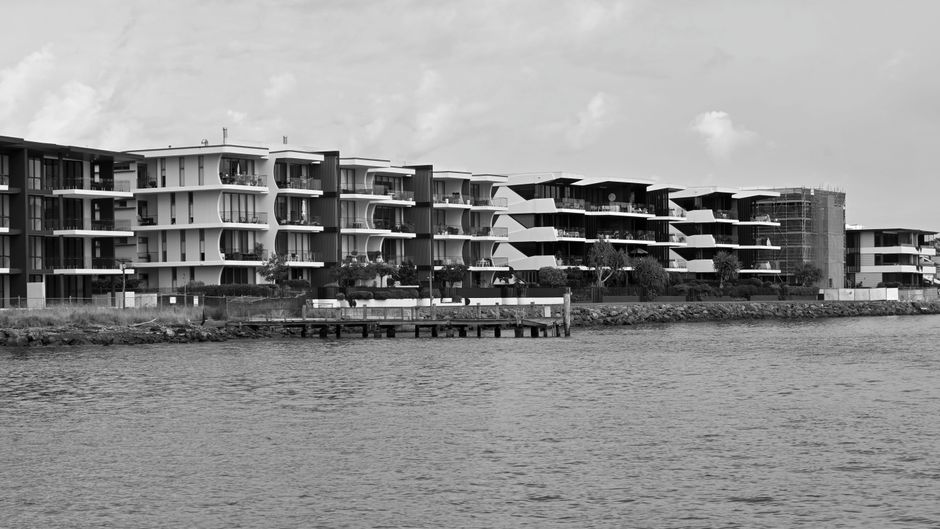
Fannie Bay has clocked a median house price of $820,000 in the June 2026 quarter, up roughly 11 percent year-on-year, making it the strongest-performing coastal suburb in the Darwin local government area by a margin that's hard to ignore. Agents working the strip between East Point Road and the Botanic Gardens say open homes that sat empty through 2023 are now drawing six or seven groups on the first Saturday.
The timing matters. Federal defence infrastructure spending under the AUKUS submarine pathway agreement — including expanded facilities at HMAS Coonawarra on Stokes Hill Wharf — has pumped a steady stream of senior officers and defence contractors into Darwin's rental pool since late 2024. Many are now converting from tenants to buyers. Combine that with a Northern Territory Government push to fast-track 1,100 public-private housing units in Palmerston, which is absorbing first-home buyers who once competed in inner suburbs, and the pressure on Fannie Bay's limited stock becomes easier to understand.
The suburb holds fewer than 1,400 dwellings. Darwin's overall rental vacancy rate sits at approximately 1.2 percent — the tightest in the country — and Fannie Bay is even thinner. Properties on Gilruth Avenue and Marara Road, which back toward the foreshore reserve and Vesteys Beach, are largely owner-occupied and change hands only when estates are wound up or career postings force a move. That scarcity is structural, not cyclical.
Gross rental yields across Darwin average between 6 and 7 percent, the highest of any capital or regional city in Australia. In Fannie Bay, yields compress slightly to around 5.4 percent because prices have moved faster than rents, but on a $820,000 purchase that still generates roughly $44,000 annually — well above what comparable waterfront product delivers in Brisbane's Hawthorne or Perth's Nedlands. The Real Estate Institute of the Northern Territory reported in its May 2026 Darwin Market Update that days-on-market for Fannie Bay houses averaged just 19 days, down from 38 days in the same period of 2025.
The suburb's proximity to Darwin CBD — about four kilometres along Gilruth Avenue — and its position beside the Darwin Turf Club and the Museum and Art Gallery of the Northern Territory anchors a lifestyle argument that resonates with buyers priced out of Sydney's beaches but unwilling to trade waterfront access. Eating on the decks at Hanuman on Mitchell Street on a Friday before walking home along the foreshore is the shorthand locals use when explaining why they don't leave.
Stock is unlikely to loosen in the second half of 2026. The NT Government's Darwin City Deal, extended through 2028, continues to fund urban amenity upgrades including the Stage 2 East Point foreshore pathway, which will further cement Fannie Bay's premium positioning once completed. Buyers who wait for a correction could find themselves watching listings dry up entirely through the October-to-March build season, when Darwin's humidity keeps casual inspectors away but serious buyers still transact.
For interstate investors, the stamp duty calculation is worth running now. A purchase at the current median of $820,000 in the NT attracts stamp duty of approximately $38,000 — notably lower than comparable coastal property in Queensland's premium suburbs, where duty bills on equivalent prices have blown out significantly over the past two years as valuations have surged. The NT's First Home Owner Grant of $10,000 doesn't apply at this price point, but there is no land tax on investment property in the Northern Territory, a structural advantage that tends to get buried in the fine print.
The practical move for anyone serious about Fannie Bay is to get pre-approval sorted and speak to agencies operating on Trower Road or along Dick Ward Drive before the spring advertising season inflates competition further. The suburb's price floor appears to have shifted — and once coastal land with this level of amenity and this degree of scarcity reprices, history suggests it rarely comes back down.
Your reaction
Spread the word
About this article
Published by The Daily Darwin
Daily brief
Free, in your inbox before 7am. Weekdays.
The Daily Network — local news across Australia